
Above-Ground vs. In-Ground Pools: What's the Real Difference?
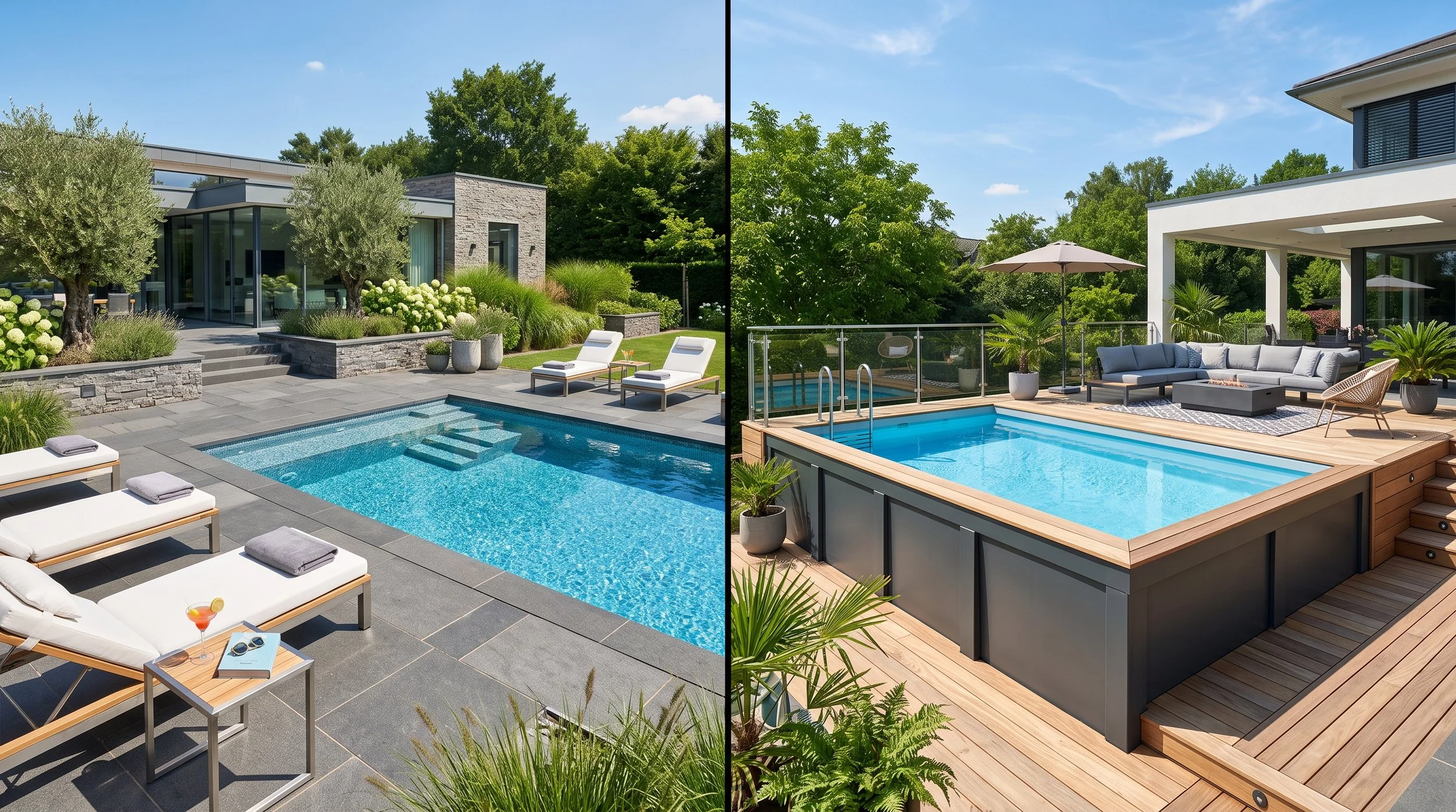
When people think "above-ground pool," they often picture a basic metal-frame pool from a big box store, not something built for real backyard living. That image is outdated. Boutique above-ground pools with glass panels, engineered wood cladding, and integrated smart systems are a genuinely different category, and one worth comparing seriously against traditional in-ground construction.
Construction and timeline
In-ground pools are built on-site: excavation, structural work (forming, rebar, gunite or shotcrete), curing time, plumbing and electrical installation, decking, and finishing. This process typically spans several months and depends on permitting, inspections, weather, and contractor scheduling at every stage.
Above-ground boutique pools arrive as a pre-engineered structure with the shell, filtration, lighting, and glass panel already built as one unit. Installation is closer to placing and connecting a finished product than constructing one from scratch, which means a dramatically shorter timeline.
Permits and approval
This is one of the biggest practical differences. In-ground pools generally require permits, plan review, and inspections at multiple stages of construction, a process that varies by county and city and can add weeks or months before work even begins.
Above-ground boutique pools generally don't require construction permits, since there's no excavation or permanent structural building involved. That alone removes one of the most common sources of delay in a traditional pool project.
Site disruption
In-ground construction involves heavy equipment, excavation, and weeks of active work in your yard, often affecting landscaping, driveways, and access to your property during the process.
Above-ground installation involves far less disruption. There's no excavation, and the process is significantly faster and more contained, which matters if you have a smaller lot, shared property lines, or just want to avoid weeks of construction noise and mess.
Cost structure
In-ground pool pricing depends heavily on site conditions, ground type, access for equipment, decking materials, and local labor costs, which makes it harder to predict without a full site assessment. Boutique above-ground pools tend to have more transparent, predictable pricing, since the structure itself is standardized and the main variables are size and optional features.
Features and finishes
This is where the gap between "basic above-ground pool" and "boutique above-ground pool" really shows. Boutique models can include:
A glass viewing panel built into the structure
A choice of finishes, including engineered wood cladding in multiple colors
Integrated LED lighting (white or multicolor)
Wi-Fi-controlled filtration and lighting
Optional upgrades like salt chlorination, counter-current swimming jets, and safety railing
These are features you'd typically expect from a custom in-ground build, not the plastic-and-metal above-ground pools most people picture.
Longevity and permanence
In-ground pools are, by nature, permanent structures tied to the property. Above-ground pools are more flexible: while they're built to be a long-term fixture in your backyard, the structure isn't excavated into the ground, which can matter if you value flexibility over strict permanence.
Which one makes sense for you?
In-ground pools tend to make sense if you want a fully custom shape, are building as part of a larger new-construction project, and have the time and budget for a longer process.
Boutique above-ground pools tend to make sense if you want a faster timeline, more predictable pricing, less site disruption, and a design that doesn't skimp on features just because it's not built into the ground.
Above-ground boutique pools aren't a compromise version of an in-ground pool, they're a genuinely different approach that prioritizes speed, transparency, and design without the traditional construction process.