
Composite Cladding vs. Real Wood for Pool Decks: Why It Matters in Florida
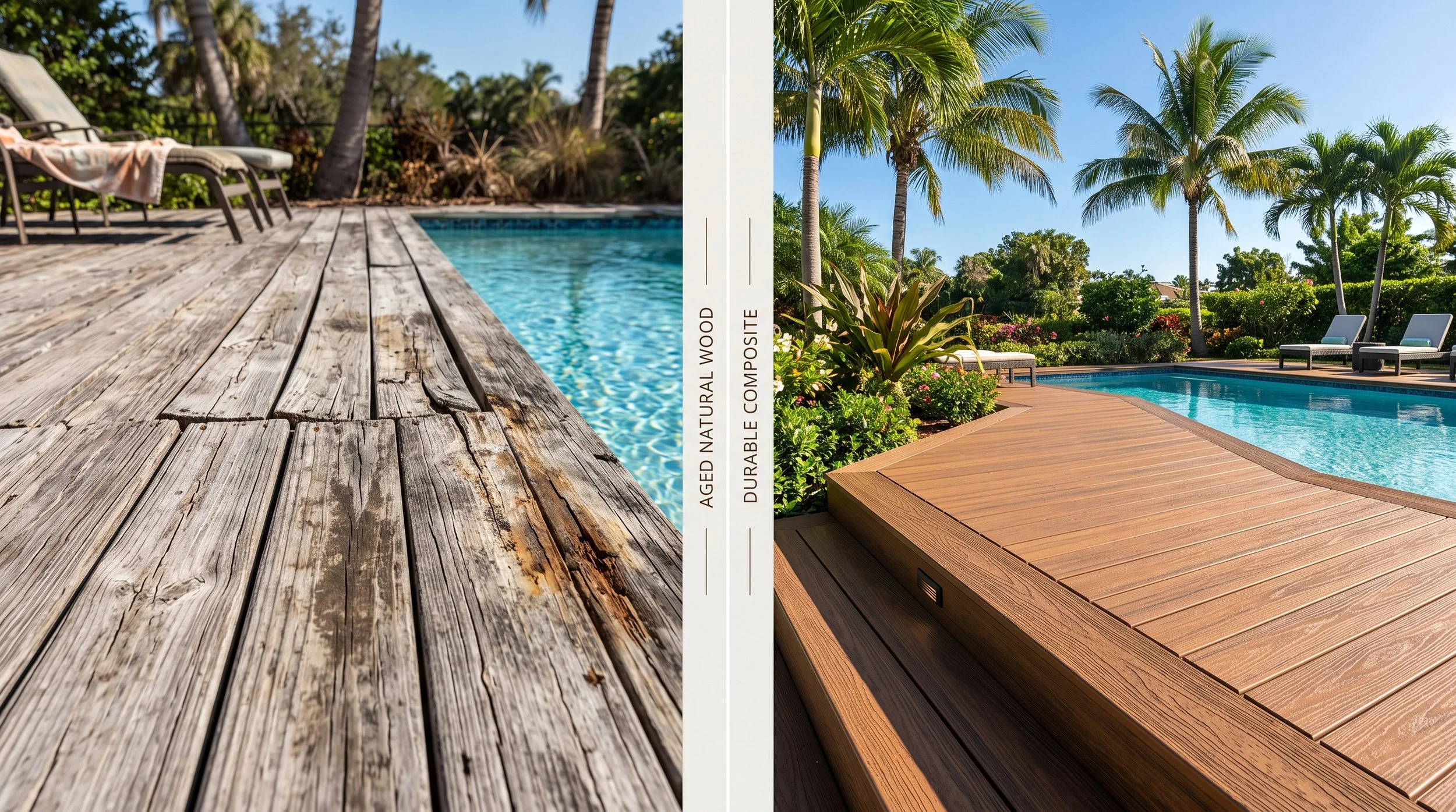
If you're choosing the exterior finish for a pool structure or deck area, wood is the look most people gravitate toward first. It's warm, natural, and familiar. But real wood and composite (engineered wood) cladding perform very differently once they're exposed to Florida's heat, humidity, and constant water contact. Here's what actually happens to each over time.
What composite cladding is
Composite cladding, sometimes called engineered wood, is made from a blend of wood flour and advanced polymers, often derived from recycled materials. These are bonded together under high heat and pressure, along with stabilizers and sealants, into a single durable material. The result looks and feels like natural wood, but performs very differently.
How they hold up to moisture
This is where the two materials diverge most clearly, and it's the single biggest factor for anything installed around a pool.
Real wood is porous and absorbs water. With constant exposure to pool water, humidity, and Florida's rain, that leads to warping, cracking, and eventually rot over time, even with regular sealing and maintenance.
Composite cladding is highly resistant to moisture. It's engineered specifically not to warp, crack, or rot, even with constant water exposure, which is exactly the environment a pool surround has to deal with every day.
Maintenance over time
Real wood needs regular upkeep to stay in good condition: periodic sealing, staining, and protective treatment. Skip that maintenance, and Florida's sun and humidity will show it fast, in the form of graying, splintering, or soft, damaged spots.
Composite cladding doesn't need to be sealed, painted, or chemically treated on a regular basis. It's built to maintain its appearance and structural integrity without ongoing maintenance, which matters a lot for something surrounding a pool you actually want to enjoy, not constantly maintain.
Appearance and finish
Composite cladding is manufactured to closely replicate the look of natural wood, including grain and texture, so you're not sacrificing much visually. It's available in a range of finishes designed to give that elevated, natural look, without the vulnerabilities of the real thing.
Sustainability
Composite cladding is made using recycled materials in its manufacturing process, making it a more sustainable option compared to harvesting new lumber, particularly for something that will need periodic replacement if made from untreated or poorly maintained real wood.
Long-term cost
Real wood might have a lower upfront cost in some cases, but factor in sealing, staining, repairs, and eventual replacement due to water damage, and the long-term cost often evens out or exceeds composite. Composite cladding's durability means fewer replacement cycles and less ongoing spend on maintenance products and labor.
The bottom line for Florida pools
Around a pool specifically, where the material is dealing with near-constant moisture, humidity, and sun exposure, composite cladding is built for exactly that environment in a way real wood simply isn't without significant, ongoing upkeep. For homeowners who want the warm, natural look of wood without the maintenance schedule, composite is the more practical long-term choice.