
Glossy vs. Matte Porcelain Tile: Which Is Right for Your Room?
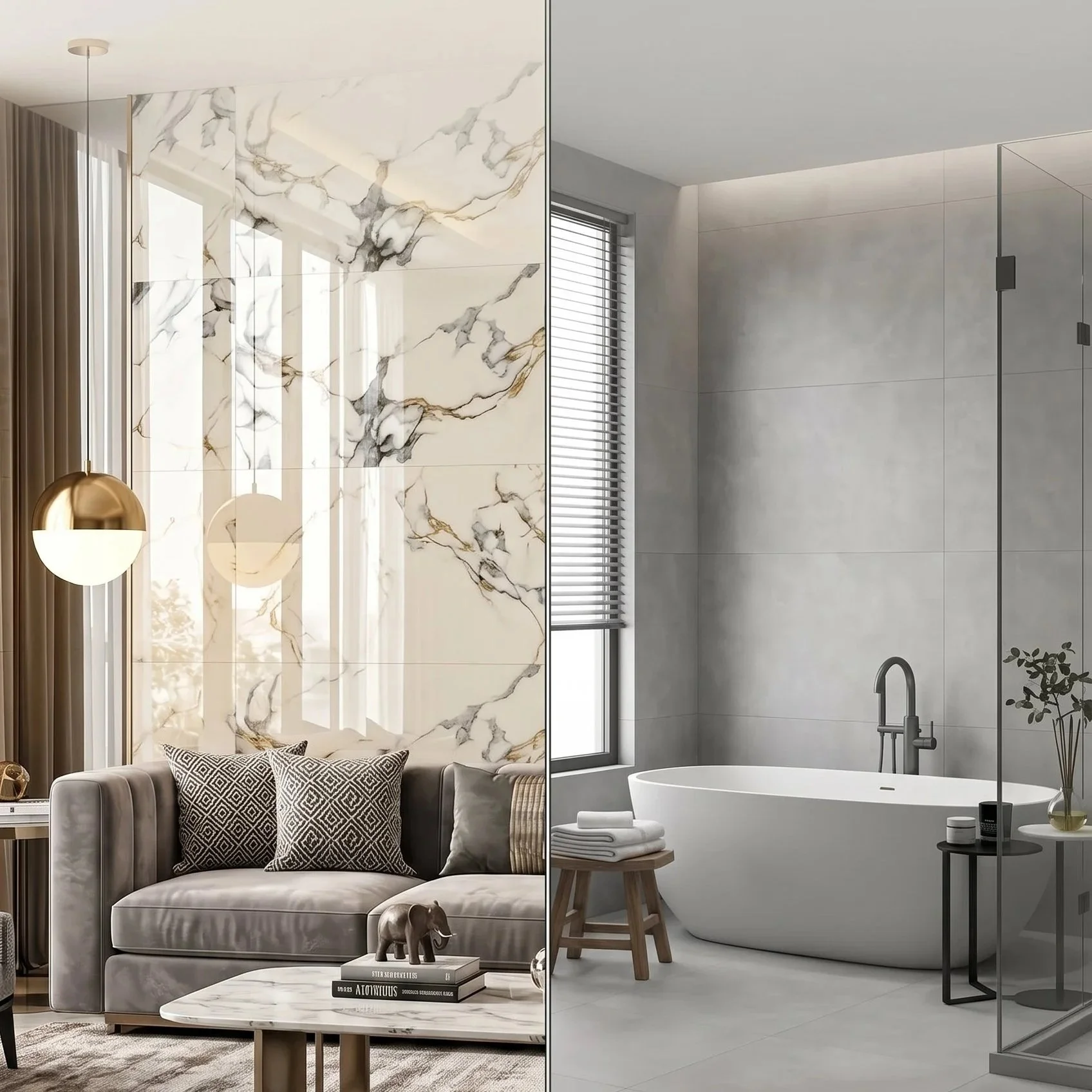
Once you've picked a color or pattern you like, there's a second decision that matters just as much: glossy or matte. The finish changes how a room looks, feels, and performs day to day, sometimes more than the pattern itself. Here's how to choose.
The visual difference
Glossy tile has a reflective, polished surface. It bounces light around a room, which can make spaces feel brighter and larger, and it tends to make colors and veining (in marble-look designs, for example) look more vivid and saturated.
Matte tile has a flat, non-reflective surface. It gives a softer, more understated look, and tends to read as more contemporary and minimalist. It also does a better job of hiding fingerprints, water spots, and everyday marks than glossy finishes.
Where glossy works best
Smaller rooms that benefit from extra light reflection, like powder rooms or smaller bathrooms
Living rooms and bedrooms where you want a brighter, more polished, formal look
Rooms with good natural light, where the reflective surface can really shine (literally)
Glossy finishes are especially popular in marble-look porcelain, since the shine reinforces the natural-stone illusion.
Where matte works best
Bathrooms and kitchens, where matte hides water spots and fingerprints far better than glossy
High-traffic areas, where a matte surface shows less visible wear over time
Outdoor spaces and pool decks, where matte and textured finishes provide better slip resistance, a genuine safety consideration, not just a style preference
Contemporary, minimalist interiors, where a flat, quiet finish suits the overall aesthetic
Slip resistance: the practical factor
This is the one place where the choice isn't purely aesthetic. Glossy tile is noticeably more slippery when wet than matte or textured tile. For bathroom floors, kitchens, and especially outdoor or pool areas, that's a real safety consideration, not just a design preference. If slip resistance matters for the space you're tiling, matte or textured finishes are the safer choice, even if you prefer the look of gloss elsewhere in your home.
Maintenance differences
Glossy tile shows fingerprints, water spots, and smudges more visibly, since the reflective surface highlights any residue. It generally needs more frequent wiping down to keep that polished look.
Matte tile hides daily wear and marks much better, making it a lower-maintenance option for busy households or high-traffic commercial spaces.
Can you mix them?
Yes, and it's a common approach. Many homeowners use a glossy finish for feature walls or smaller accent areas, where the shine and vividness add visual interest, paired with a matte finish for floors, where practicality and slip resistance matter more. Combining both within the same finish family (rather than mismatched colors) usually reads as intentional and cohesive rather than inconsistent.
Which one should you choose?
Choose glossy if: you want maximum light reflection, a more formal or vivid look, and the space isn't prone to water exposure or slip risk
Choose matte if: the space needs to hide daily wear, has any water or slip exposure, or you're going for a more contemporary, understated aesthetic
Both finishes are available across much of our collection, so once you've settled on a color or pattern you like, check whether it comes in the finish that actually fits how the room will be used.