
How to Choose Tile for a Small Bathroom (Design Tricks That Work)
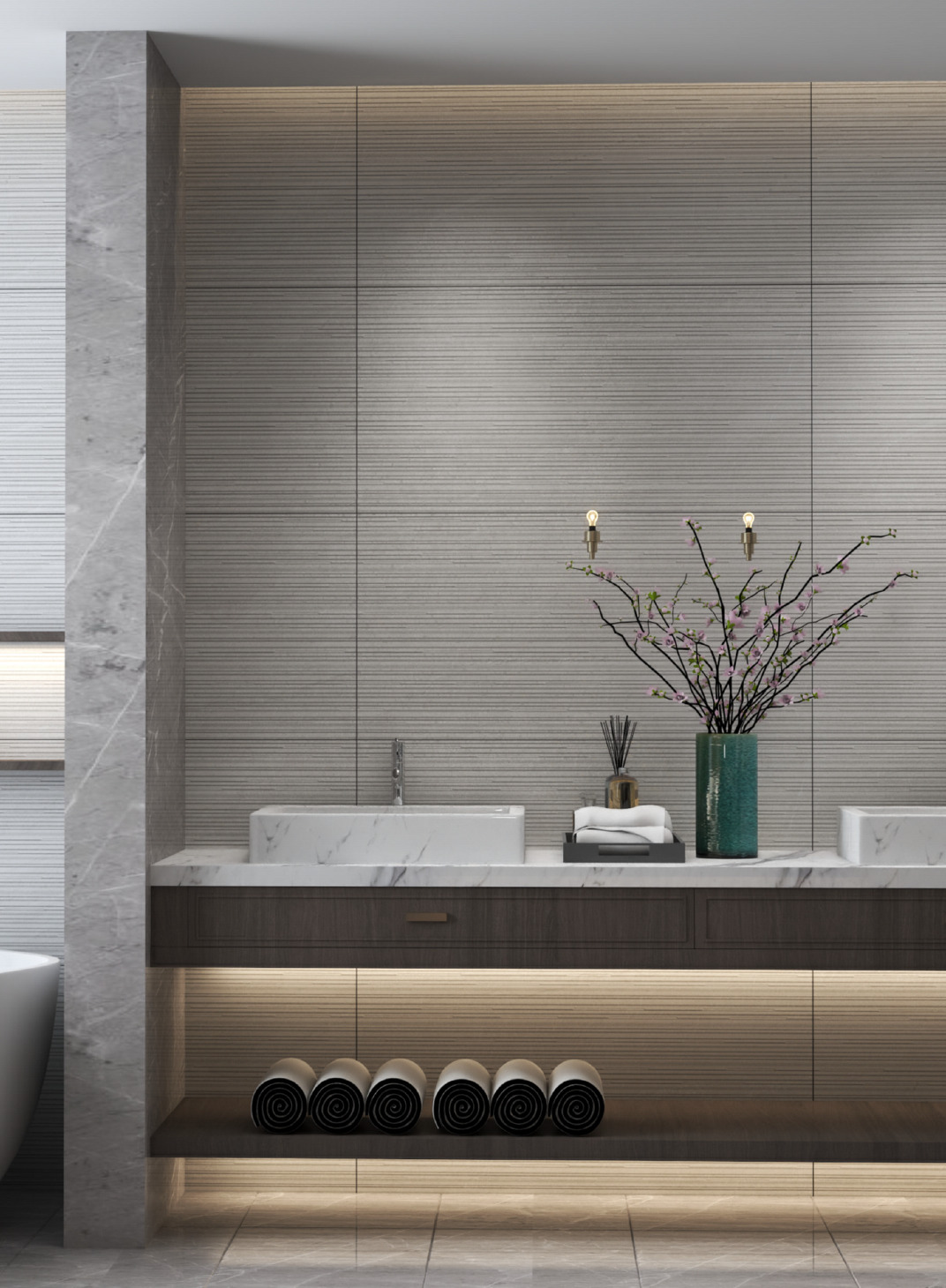
Small bathrooms come with real constraints, limited natural light, tight layouts, and every design choice feels more visible in a compact space. The good news is that tile choice can do a lot of the heavy lifting when it comes to making a small bathroom feel larger and more open. Here's what actually makes a difference.
Go light, not dark
Light colors reflect more available light and visually push walls outward, which matters more in a small bathroom than almost anywhere else in the home. Whites, soft greys, and warm creams all work well. Dark tile can look dramatic in photos, but in a small, often low-light bathroom, it tends to make the space feel smaller and more closed in.
If you want contrast or visual interest, consider using a darker tone sparingly, like on a single accent wall or the shower niche, rather than across the whole room.
Large-format tile, fewer grout lines
It might seem counterintuitive to use large tiles in a small room, but it works. Large-format tile (like 60x120cm) means fewer grout lines, and fewer grout lines read as a more continuous, uninterrupted surface. Lots of small tiles create lots of visual breaks, which can actually make a space feel busier and smaller, not bigger.
Glossy finishes reflect more light
In a small bathroom, especially one without much natural light, a glossy finish helps bounce available light around the room. It's a small thing, but it adds up, particularly on walls, where a glossy tile can make artificial lighting feel more generous.
Carry the tile from floor to wall
Using the same tile (or a closely related one) on both the floor and walls removes another visual break point, the line where floor meets wall. That continuity makes the whole room read as one uninterrupted space rather than a series of separate surfaces, which is especially effective in small bathrooms.
Vertical layouts for shorter or narrower rooms
If your small bathroom has low ceilings, laying rectangular tile (like 60x120cm) vertically on the walls draws the eye upward, making ceilings feel taller. It's a simple layout choice that changes how the whole room feels without changing the tile itself.
Keep the pattern simple
Bold, busy patterns can overwhelm a small space fast. If you're drawn to a patterned or decorative tile, consider using it in one focused area, like a shower wall or a single accent, rather than throughout the whole room. Pair it with a simpler, solid-color tile everywhere else so the pattern has room to stand out instead of competing with itself.
Mind the grout color
Grout color affects how uniform a tiled surface looks. A grout color close to the tile itself creates a more seamless look, reinforcing the sense of a larger, more continuous surface. A strongly contrasting grout, on the other hand, emphasizes every individual tile and grout line, which tends to work against you in a small space.
Putting it together
For a small bathroom that feels as open as possible, the general formula is: light color, large format, glossy finish, floor-to-wall continuity, and a simple pattern. From there, you have plenty of room to add personality through fixtures, accessories, and a single accent moment, without working against the space itself.